
For commercial fleet operators, rental agencies, and large industrial campuses, the aesthetic appearance of a utility vehicle is just as important as its mechanical reliability. A golf cart with a cracked, faded, or chipping front cowl instantly damages a company's brand image and signals poor maintenance to guests.
Historically, many low-cost manufacturers utilized hand-laid Fiberglass Reinforced Plastic (FRP) to mold vehicle bodies. While cheap for small-batch production, fiberglass is a maintenance nightmare in high-frequency rental environments. To permanently solve the issues of cosmetic degradation and expensive panel repairs, Keldi utilizes Automotive-Grade Polypropylene (PP) Injection Molding for all exterior body components, radically lowering the Total Cost of Ownership (TCO) for our commercial partners.
Fiberglass is inherently brittle. It is created by layering glass fiber mats and coating them in rigid resin.
When a fiberglass golf cart bumps into a post, scrapes against a low wall, or suffers a minor collision, the rigid resin cannot absorb the impact. Instead, it instantly cracks, splinters, or shatters. Repairing fiberglass is a highly specialized, toxic, and labor-intensive process requiring sanding, resin patching, precise color-matching, and repainting. Furthermore, standard fiberglass gel coats are highly susceptible to UV degradation; within two years of operating under the tropical sun, the deep colors will fade to a chalky, matte finish, requiring expensive full-body repaints to maintain fleet standards.
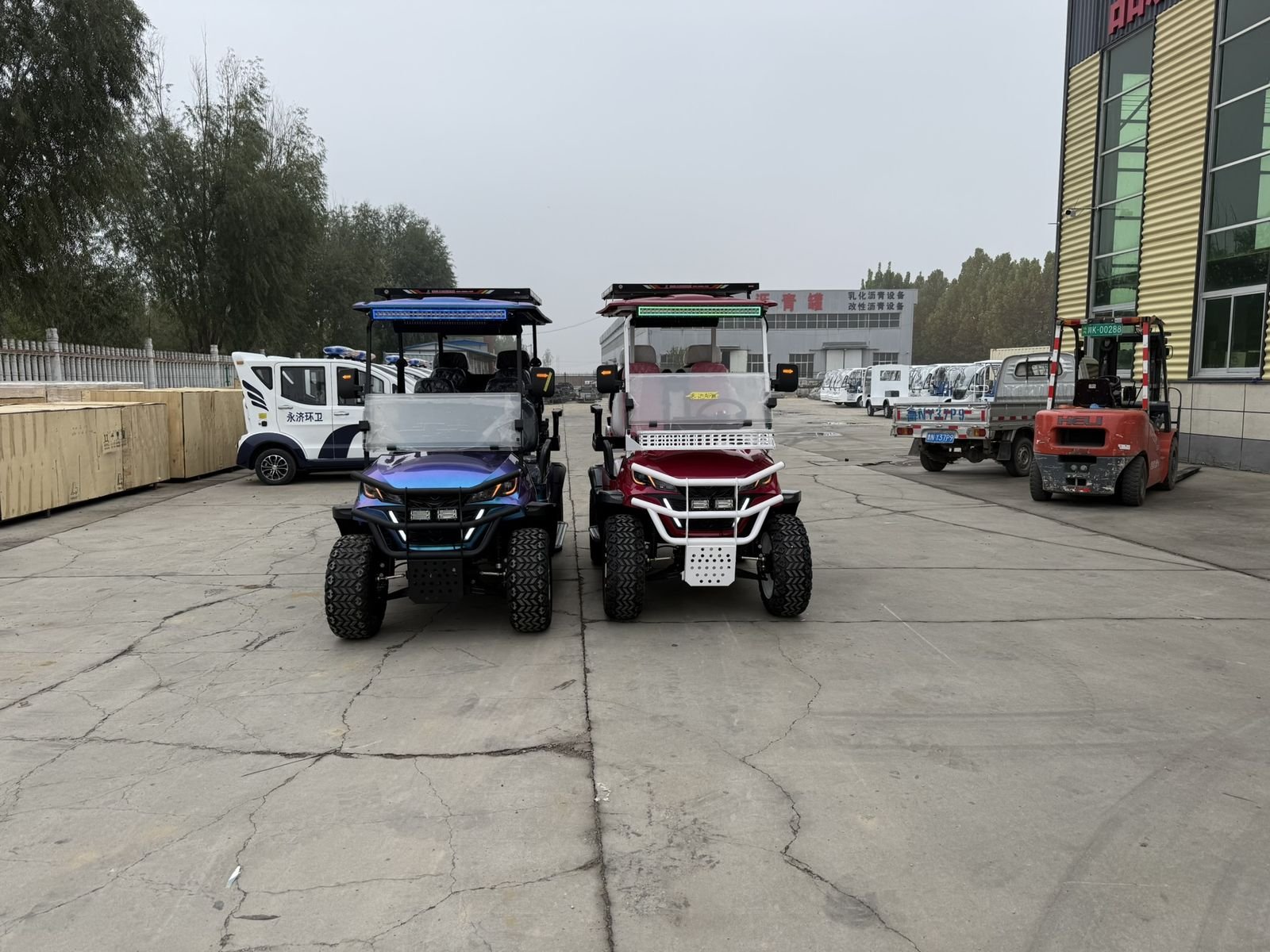
Keldi has abandoned obsolete fiberglass in favor of high-pressure PP injection molding—the exact same manufacturing process used for modern automobile bumpers and interior trims.
Kinetic Energy Absorption: Polypropylene is a thermoplastic polymer. It possesses high tensile strength combined with structural elasticity. When a Keldi cart experiences a minor low-speed impact, the PP front cowl actually flexes inward to absorb the kinetic energy, and then pops back into its original shape without cracking or permanently denting.
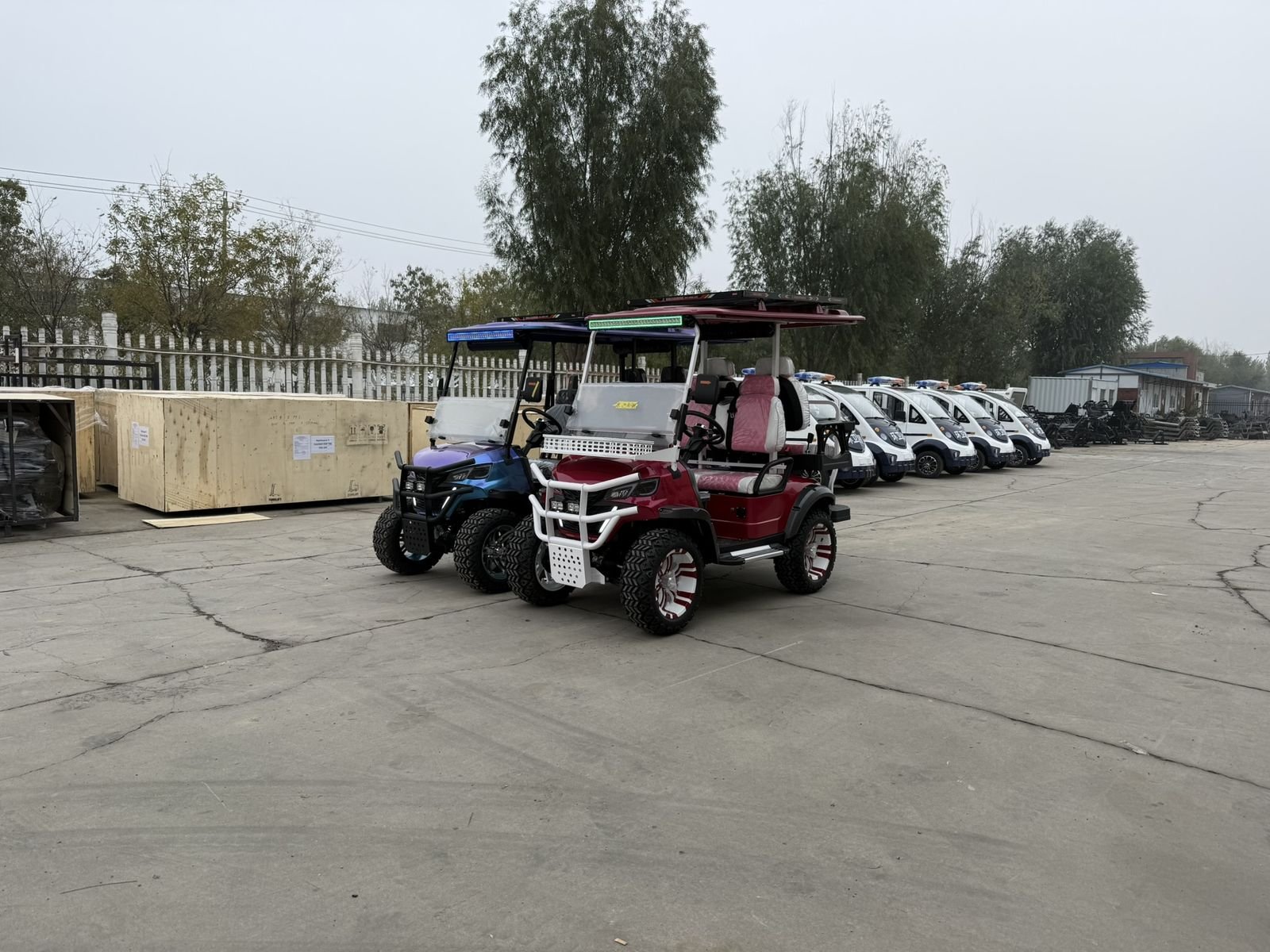
Through-Color Technology & Automotive Paint: Unlike fiberglass which only has a thin surface layer of color, PP pellets can be color-matched before molding. For our high-gloss luxury models (like the chameleon purple or ruby red seen above), the PP substrate is treated with an adhesion promoter and finished with a multi-layer, UV-resistant automotive clear coat. This ensures a mirror-like finish that will not peel or flake.
Precision Fit and Finish: Injection molding utilizes multi-ton steel dies, guaranteeing that every single body panel is produced with millimeter precision. There are no uneven gaps, sharp raw edges, or asymmetrical mounting holes—ensuring a flawless, luxury aesthetic.
| Material Metric | Traditional Fiberglass (FRP) | Keldi Automotive PP Injection Molding |
| Impact Resistance | Brittle; shatters or spider-cracks easily. | Elastic; flexes and absorbs minor impacts without breaking. |
| UV Resistance | Fades quickly to a chalky finish under direct sun. | Highly UV stable; retains deep gloss and color depth for years. |
| Weight | Heavy, reducing battery range and adding strain. | Lightweight, maximizing battery efficiency and vehicle speed. |
| Repair / Replacement | Requires expensive, labor-intensive bodywork. | Modular design; damaged panels can be unbolted and swapped in minutes. |
Q: If a PP body panel is severely damaged in a major crash, how is it repaired?
A: The beauty of Keldi's modular injection-molded design is that panel replacement is strictly mechanical. You do not need a body shop. A fleet mechanic can simply unbolt the damaged cowl and bolt on a brand-new factory replacement part in under 15 minutes, drastically reducing vehicle downtime.
Q: Does PP plastic become brittle in freezing winter temperatures?
A: Keldi formulates our PP material with specialized cold-weather elastomers. This prevents the plastic from becoming brittle or shattering during winter operations, ensuring year-round durability in any climate.
Q: Are the injection-molded parts environmentally friendly?
A: Yes. Polypropylene is a 100% recyclable thermoplastic. Unlike fiberglass, which ends up permanently in landfills and contains toxic resins, PP body panels can be fully recycled at the end of the vehicle's life cycle.
Zero-Gap Assembly: Our precision injection molds ensure that all front cowls, rear bodies, and dashboard assemblies interlock seamlessly, eliminating rattles and vibrations during driving.
OEM Color Customization: Because we own our molding and painting lines, we can easily produce custom fleet colors to match specific corporate branding, resort themes, or municipal requirements with perfect consistency.
Lower Insurance & Maintenance: By practically eliminating the need for complex cosmetic bodywork, Keldi vehicles offer a significantly lower operational overhead for high-turnover rental businesses.
--------------------------------------------------
KELDI Golf Cart & Sightseeing Buggy | Source Manufacturer
—— Delivering High-Profit, Ultra-Stable Electric Transport Solutions Globally
Skip the middleman markups and unreliable builds. Backed by massive source-factory manufacturing, Keldi provides comprehensive fleet solutions—from heavy-duty anti-corrosion engineering and rapid delivery to lifetime spare parts supply—maximizing your ROI and ensuring seamless operations.
📧 Get Direct Factory Quotes: info@keldigolfcart.com
🌐 Explore Factory Capabilities: www.keldigolfcart.com
📞 WhatsApp / WeChat: +86 15068872777

Built to Mod, Born to Profit.
The ultimate platform for custom golf cart professionals.
Shandong Dezhou
+86 15068872777
info@keldigolfcart.com
Whatsapp:

© KELDI2026.All right reserved.Powered by KELDI
China HQ: Shandong, Dezhou
Whatsapp:+86 +86 15068872777


